

Articles
- American Colonial Architecture in the Philippines
- City Center Management
- Sustainable Development
- You and Your Architect
- Basic Information
American Colonial Architecture in the Philippines - Part 1
As the 20th century dawned, dramatic changes swept through the Philippines. The lengthy Spanish reign of more than 300 years came to an end in 1898; and young, powerful America eagerly took over as the new colonizer until 1946. The priorities, policies and strategies of America were concretized in the structures erected in its new territory. With the new regime came new architecture.
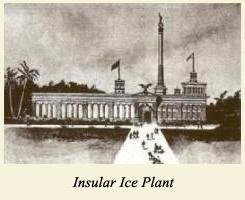 The American Insular Government in the Philippines was established in 1901, and immediately, the Bureau of Architecture and Construction of Public Buildings was created. As an agency of the Department of Public Instruction, its priority projects were in public health and education-- thus the construction of the Bureau of Health Building, the Insular Ice and Cold Storage Plant, and the numerous schoolhouses all over the land. In those early years, construction was primarily undertaken by the engineers of the U.S. Army.
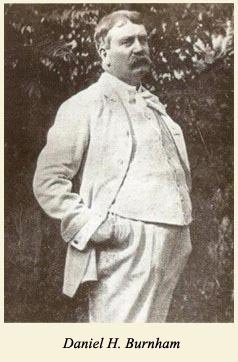 Through the invitation of Governor-General William Cameron Forbes, architect and city planner Daniel H. Burnham came to the country in 1904 and made plans for Manila and Baguio, a summer capital which was of utmost importance to the Americans thrust in the tropics.
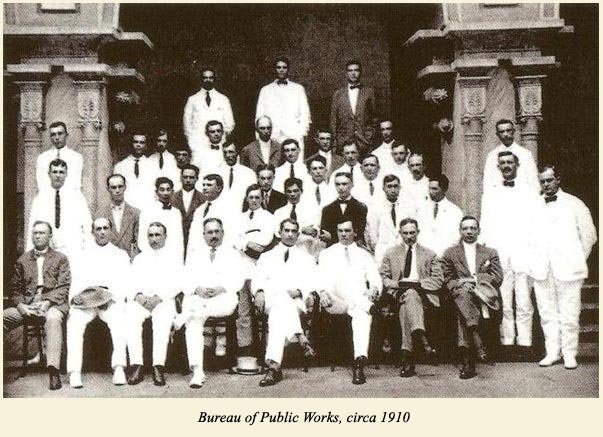
Burnham, who belonged to the Chicago School that pioneered the modern design movement and an advocate of neoclassicism, recommended William B. Parsons to implement his plans. As Consulting Architect of the Bureau of Engineering (later called the Bureau of Public Works), Parsons evolved an "American colonial Philippine architecture" which fused the modern style with Filipino influences. This principle inspired the Manila Hotel, the Philippine General Hospital, the Army-Navy Club and the Philippine Normal School. Apart from Burnham and Parsons, American architects like Pierce Andersen (Burnham's associate), Ralph Doane, and Harold Keys also left their mark on the local buildingscape.
Contents under this American Colonial Architecture in the Philippines topic have been lifted from the 2010 calendar publication of the United Architects of the Phillippines, which was made in cooperation with Boysen Philippines.